

Walk into any kitchen at 10 p.m. and you’ll see the glow. A face inches from a screen, thumb flicking through clips, an algorithm whispering “just one more.” Parents are anxious, schools are desperate, lawmakers are noisy, and kids are caught in the middle. We’re now in the thick of a fierce conversation about what to do—nudge, limit, or outright block—when it comes to children and social platforms. The debate rarely fits into a neat box because it isn’t just about phones; it’s about childhood, health, power, and what counts as a fair digital playing field.
“Social media bans children” isn’t one law or one policy. It’s a constellation of moves: product tweaks, school rules, platform minimum ages, parent-led limits, and, increasingly, legislation with teeth. Some see these steps as overdue guardrails. Others warn of overreach, unintended harms, and a false sense of safety. Underneath the heat is a set of core questions we can actually examine clearly: what the risks look like, how protections work (or don’t), and what families and institutions can do now that doesn’t depend on waiting years for the perfect policy.
What Does a “Ban” Actually Mean?
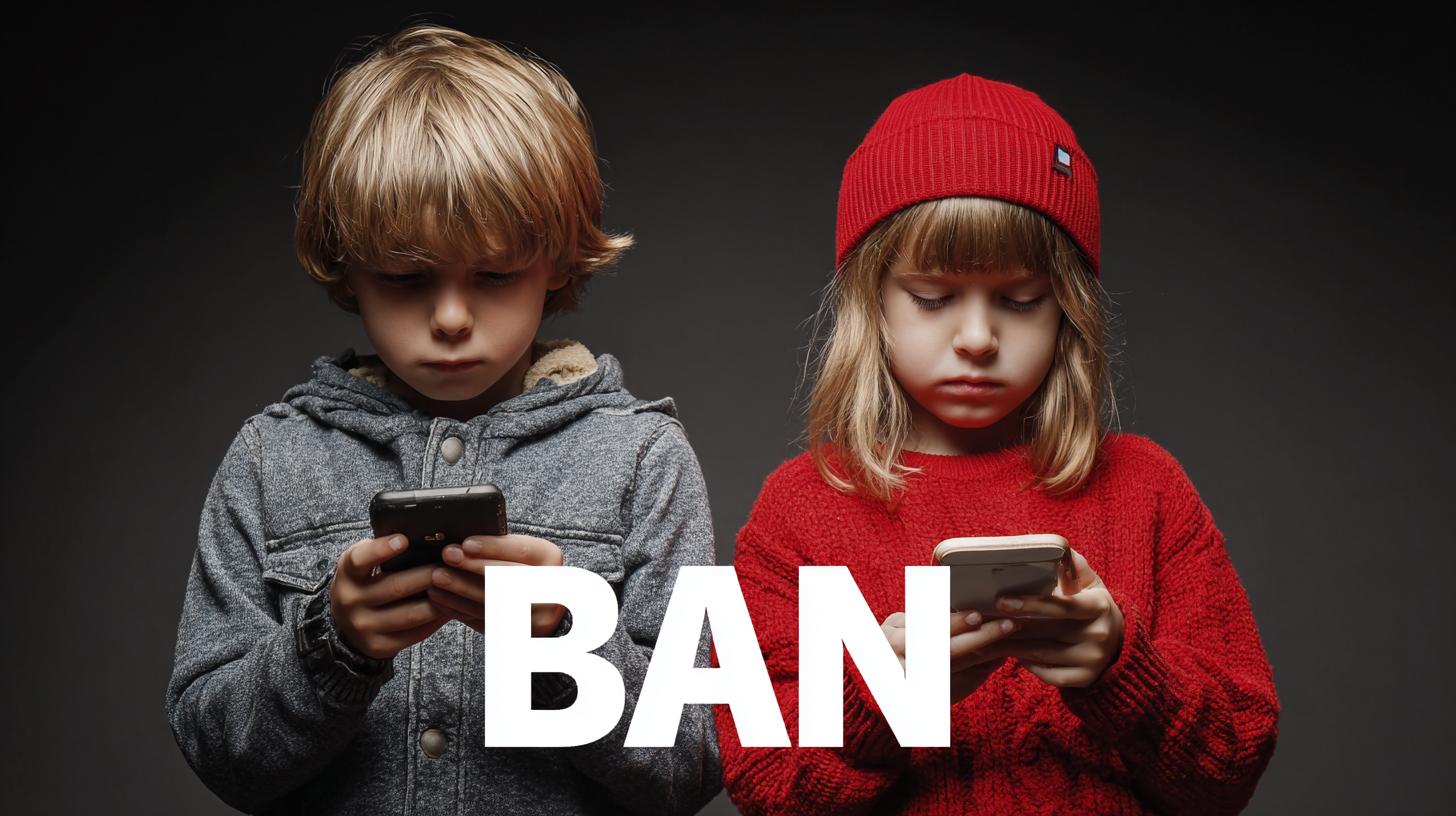
“Ban” isn’t a single lever. It can mean account restrictions by age, device-free classrooms, platform design changes, or statewide statutes that require identity checks. It starts with the basics: most platforms set Age restrictions on social media at 13 or older, largely to align with children’s privacy laws. But a line in the terms of service doesn’t magically change reality. Kids lie about their birthdays, phones pass between friends, and novelty trumps rules in the most human way possible.
That’s why the battleground has shifted to Enforcement of social media age limits. Platforms are experimenting with identity checks, face-age estimation tools, and inference from behavior, all rolled up under the banner of Social media verification for age. Critics argue that aggressive checks can create new privacy risks and exclude teens who lack IDs, while supporters counter that no policy works without a way to tell a twelve-year-old from a twenty-year-old. Both can be right: a world that protects kids also has to respect the data they shouldn’t have to surrender in the first place.
And there’s the “where” of it all. Beyond apps at home, school networks often block certain services, and some campuses collect phones at the door. That’s one flavor of Social media bans in schools, aimed at reclaiming attention and tamping down drama in hallways. None of these moves erase the internet. They’re speed bumps, and the question is whether they slow down the right traffic without stalling the rest of childhood.
Health, Attention, and the Costs We Can Measure
Mounting research tracks the Mental health impacts of social media, but the story is rarely a simple cause-and-effect. Associations appear strongest for heavy and compulsive use, especially when young people are exposed to relentless comparison, harassment, or sleep loss. The U.S. Surgeon General’s 2023 advisory put a spotlight on risks, urging guardrails while acknowledging that for some teens, online spaces can be lifelines. A key pattern keeps surfacing: vulnerability amplifies vulnerability. Kids already struggling may be more affected by spirals into feeds and comment sections.
It’s impossible to talk about this without naming the steady drip of comparison. Researchers have tied the Impact of Instagram on teens to body dissatisfaction and rumination for some users, particularly girls who follow appearance-focused content. That sits alongside the broader category of Social media and body image issues, where visual-first platforms concentrate attention on looks and likes. Interventions aimed at building media literacy help, but they don’t erase the underlying logic of a feed primed for reaction.
Then there’s the clock. The relationship between Child development and screen time and well-being is nuanced. Not all screen time is equal; a late-night doomscroll is not the same as coding a project with friends. Excessive use, though, is consistently linked with Social media and sleep disruption, which cascades into mood, memory, and school performance. That brings us to the classroom: studies suggest that heavy social use can correlate with lower grades, though confounding factors abound. Even so, the worry about Social media and academic performance isn’t superstition; attention is a finite resource and feeds are engineered to win it.
Parents describe what clinicians call Social media addiction in children—not a formal diagnosis in many manuals, but a useful term for compulsive use that crowds out other activities and persists despite harm. Even without clinical labels, the tug is real. Reducing notifications, setting boundaries, and transparent family agreements can soften that tug, yet it helps to be honest about the design we’re up against. Engagement incentives push toward stickiness, and the absence of friction is part of the problem.
Safety, Privacy, and the Business of Childhood
The case for stronger protections is strongest where kids can’t fully consent or understand risk. That starts with Child privacy in social media, which goes well beyond whether a profile is public. Location metadata, faceprints, voice samples, browsing trails, and inferred interests all create a shadow of a child’s life. This is where the law and product design intersect. Some countries and states now press for data minimization and age-sensitive defaults, reflecting a growing discomfort with surveillance as the price of entry to social life.
Beneath the surface is a thorny set of Ethical issues with child data collection. The argument that “it’s just anonymized analytics” runs thin when models can re-identify users or profile them with eerie precision. Even if a platform never sells a young person’s name, pervasive Social media data sharing concerns persist around ad tech partners and cross-app tracking. Parents often assume a “kids mode” is walled off; in practice, the walls vary, and some are made of paper.
Advertising adds another layer. Many jurisdictions are tightening or revisiting Bans on advertising to children online, or limiting personalized ads to minors. Platforms tout their progress and, to be fair, some of it is real. That feeds into design shifts—more prominent parental dashboards, tighter default privacy, and under-18 versions of feeds. These are bundled as Social media platforms child safety features, and they’re helpful when they are the automatic starting point rather than settings buried three menus deep.
Content is the next front. “Moderation” sounds dry, but Social media content moderation for kids is existential: a ten-year-old stumbling into self-harm material isn’t an edge case when the system is optimized for engagement. Companies now pour resources into classifiers for nudity, violence, and hate speech, yet gaps remain, especially in non-English content and coded slang. The other puzzle is the feed logic itself—Social media algorithms for kids can tilt toward educational or pro-social material, but a miscalibrated recommender may just smother nuance with sanitized fluff, or worse, over-amplify edgy content because it triggers reactions.
When Lawmakers Step In
Regulators are no longer watching from the sidelines. A wave of Government laws on child social media is testing where to set the dials: default privacy, parental consent, and what platforms owe families by design. In the European Union, data protection rules let member states set a digital age of consent (often between 13 and 16) for children to use online services with or without a parent’s say. Elsewhere, lawmakers are pressing for Parental consent for social media before a teen can create an account, arguing that the family should have a formal voice at the door.
Inevitably, lawsuits follow. Several U.S. state laws have been blocked or narrowed in court, a clear example of Legal challenges to social media bans. Judges tend to probe whether statutes are too vague, overbroad, or collide with free speech rights. The tension is not a bug; it’s constitutional design doing its sorting work. Meanwhile, platforms themselves face a growing wave of Lawsuits over child social media harm, brought by school districts, states, and families alleging design negligence. Many claims will fail; some will stick; the pressure will reshape products regardless.
On the ground, it looks fragmented. Some districts and ministries have embraced Social media bans in schools, locking up phones during the day to restore focus and cut down on hallways turned into livestream sets. Abroad, a few nations have gone further—entire services blocked or youth “modes” with strict time limits—creating the patchwork we might call Global bans on child social media, even though most are partial or indirect. The language of bans also shows up in proposals like Bans on TikTok for minors, but many of these efforts morph into restrictions, not outright prohibitions, once drafters collide with practical and constitutional limits.
Terms of service still define the baseline: Bans on YouTube for under 13 are embedded in YouTube’s rules (with supervised experiences and separate apps for younger users), and de facto Bans on Facebook for children exist through minimum ages. Meanwhile, proposals for Bans on Snapchat for minors and Bans on Twitter/X for teens surface periodically in policy debates, usually as shorthand for tighter verification and higher default safeguards. If anything, the trend is away from slogans and toward criteria: What should be on by default? What proof of age is acceptable? Where does a parent’s role start and the platform’s duty end?
Platforms at a Glance: Minimum Ages and Safety Levers
Before we get lost in abstractions, it helps to line up what’s actually on offer and what the rules say. Different companies converge on similar age floors, but the details of verification and supervision matter. The snapshot below highlights common ground and the edges that still draw critique.
Age floors aren’t magic shields. They set expectations and shape product design. When a platform invests in effective reporting tools, parental dashboards, and teen-specific features, real-world behavior shifts. When those features are hard to find, kids and parents default to workarounds, and all the promised safety washes out in the friction.
| Platform | Stated Minimum Age | Verification Approach | Key Child/Teen Safety Features | Notes |
|---|---|---|---|---|
| YouTube | 13+ (YouTube); under 13 via supervised accounts/YouTube Kids | Birthdate entry; parental setup for supervised experiences | Restricted Mode; supervised accounts; default privacy for minors | Children’s content has limited data collection and ads |
| 13+ | Birthdate + face-age estimation or ID in some regions | Family Center; DM limits; Take a Break; sensitive content controls | Teen-specific nudges away from certain topics/time sinks | |
| TikTok | 13+ (separate under-13 experience in some markets) | Birthdate + periodic prompts; appeals may require ID | Default time limits for teens; restricted DMs; Family Pairing | Regional “youth mode” variations with stricter defaults |
| Snapchat | 13+ | Birthdate entry; verification if flagged | Family Center; friend discovery controls; location sharing opt-in | Ephemeral content complicates oversight |
| X (Twitter) | 13+ | Birthdate entry; ID in limited cases (e.g., paid tiers) | Safety Mode; content sensitivity controls; community notes | Open discovery can expose teens to adult content if misconfigured |
| 13+ | Birthdate; ID if challenged | Parental tools via Meta Family Center; default privacy for teen accounts | Less teen-preferred than Instagram/TikTok but still widely used |
These matrices are always changing as companies respond to pressure from parents, regulators, and courts. The through-line remains: features help, but they don’t replace culture, family norms, and the hard work of attention management.
Policy Landscapes: Where the Rules Are Tighter—and Looser
The conversation is global, but the map is messy. Comparing jurisdictions clarifies what’s political theater and what’s enforceable. This is where International child social media policies diverge: some systems emphasize data rights, others design codes, and others lean on schools to set the tone locally. It’s useful to sketch Social media bans global comparisons to see patterns and exceptions without pretending they’re all the same.
Interventions differ by leverage point: data protection agencies can pressure default settings; parliaments can legislate parental consent; education ministries can restrict devices on campus. Courts then arbitrate when laws go too far or not far enough. Families experience the outcome as a blend of nudges at home and hard stops at log-in screens.
| Region/Country | Policy Focus | Example Measures | Status/Notes |
|---|---|---|---|
| European Union | Data protection, age of consent for online services | GDPR allows 13–16 member-state age; tighter default teen privacy | Strong enforcement via data regulators; DSA adds platform duties |
| United Kingdom | Design codes and children’s rights | Age-Appropriate Design Code; privacy-by-default for minors | Regulator guidance reshapes product defaults and profiling limits |
| United States (federal/state) | Privacy (children), platform accountability | COPPA for under-13 data; state laws on consent/verification | Several state laws facing court challenges; national reform debated |
| France | School environment | Mobile phone restrictions in many schools; digital citizenship | Focus on classroom attention and safety culture |
| Australia | Safety standards and enforcement | eSafety guidance; takedown processes; age-appropriate design push | Strong complaints channels; co-regulatory model |
| East Asia (various) | Youth modes and time limits | Curfews, limited daily use windows, real-name systems in some apps | Heavier reliance on ID frameworks; varied by country |
The thread through all of this is consent and control: who grants it, who enforces it, and how we keep the cure from creating its own disease. Strong rights frameworks tamp down the worst excesses, but they work best with practical, visible design choices parents and kids can actually use.
Do Bans Work? What We Know and What We Don’t
Evidence is growing but still mixed. A handful of Social media bans effectiveness studies suggest that limiting access at certain hours improves sleep and homework time, and that school-day phone restrictions lower in-class disruptions. Other research warns that blanket bans can backfire by driving use underground, reducing help-seeking in online communities, or making the transition to social life later more jarring. Both can be true depending on context and how a ban is implemented.
Less examined, but crucial, are the Psychological effects of social media bans on kids who rely on digital spaces for identity and support. Pulling the plug may alleviate anxiety for some and worsen isolation for others. The Impact of bans on child socialization is especially visible after school: many peer interactions are now coordinated online. If the only kid off-grid never gets the invite, the intervention solves one problem by creating another. That’s not an argument against limits, but a nudge to design them around real life—time windows, supervised access, and gradual autonomy.
Balancing is the name of the game. Parents and policymakers are weighing trade-offs rather than absolutes—and they should name them clearly. That’s where a compact list can clarify the shape of the debate without pretending there’s a single lever to pull.
- Benefits often cited: less exposure to harmful content; fewer late-night scrolling sessions; reduced cyberbullying; reclaimed attention for school and sleep; more face-to-face interaction.
- Risks often flagged: loss of positive communities; reduced digital literacy; workarounds that weaken trust; disproportionate burdens on marginalized families; privacy trade-offs in strict verification schemes.
That is the Social media bans debate pros cons in one glance. Real progress comes from measuring outcomes, not headlines, and from adjusting when a policy causes unintended harm.
What Families Can Do Now—Without Waiting for Congress or the App Store
Policy takes time. Home can move faster. Start with clarity on values and a practical plan, acknowledging that kids need practice, not just restrictions. Parents don’t have to engineer everything from scratch—there are tools, scripts, and communities ready to help.
First, use the tools within reach. Modern phones and network gear offer robust Parental controls for kids online that can set downtime, block new apps without approval, and filter content. Layered on top are Monitoring tools for parents that provide alerts about risky content or sudden spikes in usage. The rule of thumb: transparency first. Tell kids what’s being monitored and why; secrecy breeds evasion more than safety.
Second, consider gentle detours rather than dead-ends. There are real Alternatives to social media for kids—group texts with known friends, school-run forums, hobby communities with active moderation, and clubs that blend online coordination with offline activity. For families who want training wheels, Alternatives like kid-safe apps provide curated environments, clearer privacy policies, and fewer pressure-cooker features like public follower counts.
Third, turn safety into a shared skillset. Schools that weave Social media education in schools into health or civics classes see stronger outcomes than one-off assemblies. Families can echo that at home with practical “what would you do if…?” role-plays and ongoing Family discussions on social media about values, boundaries, and how to spot manipulation. Pair that with Cyberbullying prevention for children strategies—block/report steps, saving evidence, and when to escalate to adults—and kids find their feet faster.
Finally, fight misinformation with knowledge. Districts and nonprofits run Educational campaigns on social media risks that don’t just scare; they teach. Community-led Social media literacy programs demystify algorithms, attention traps, and the ways design nudges shape behavior. These aren’t luxuries; they’re the difference between kids being targets of a system and users who understand it well enough to bend it to healthier ends.
Special Topics Reshaping the Landscape
Some corners of the conversation carry their own gravity and keep showing up in headlines and court filings. They’re not side issues; they’re stress tests for how we protect children without flattening their rights.
Start with the creators themselves. A new generation earns money online, which is why Child influencers regulations are maturing—requiring earnings to be held in trust, mandating parental oversight, and limiting exploitative schedules. The goal is to avoid repeating the worst of child acting’s past in a new medium. Platforms and agencies are scrambling to adapt contracts and transparency to this reality.
In parallel, the courtroom is becoming a policy lab. The uptick in Lawsuits over child social media harm has pushed companies to disclose internal research, change features that invite binge use, and bolster reporting tools. Not every case merits sweeping conclusions, but litigation has a way of surfacing documents that accelerate public understanding. That public pressure, in turn, fuels Child mental health advocacy, where pediatric groups and nonprofits press for smarter defaults, investment in research, and better access to services for kids who are struggling.
Design demands will follow. Expect more formal guidance on Social media influence on youth behavior, not as a scold, but as design criteria: fewer public vanity metrics for minors, friction in late-night use, and better on-ramps to crisis support when someone searches for self-harm topics. Meanwhile, families and watchdogs are pressing for clearer disclosures about data practices to confront persistent Social media data sharing concerns. Sunlight matters, but so do brakes: throttling data collection that isn’t needed for a child’s core experience is just good engineering.
Zooming out, coalitions matter. Advocacy groups for child protection have become more sophisticated, forming cross-border alliances with educators and researchers. That ecosystem is a counterweight to platform lobbying and a partner in crafting standards. If the next few years are going to produce real guardrails, those alliances will likely be the reason.
Looking ahead, there’s a near-certainty of momentum on Future trends in child social media bans—not just prohibitions, but hybrid approaches: tighter age assurance embedded in devices and app stores, default private accounts for all minors, restricted recommendation pools for new teen users, and better family onboarding flows. As machine learning improves, expect more accurate age estimation that preserves privacy and less friction for legitimate teen users, paired with stronger catches when adults try to infiltrate youth spaces.
Policy Flashpoints: The Platforms Everyone Argues About
Some services become shorthand for the entire debate. TikTok’s influence machine draws scrutiny about late-night swiping and data flows; YouTube is the ocean most kids swim in; Instagram remains a center of identity construction for teens; Snapchat’s ephemerality eludes adult oversight; X’s open firehose exposes minors to a wild mix of viewpoints and mature content. Each platform has to own the risks native to its design.
In practice, arguments about Bans on TikTok for minors usually become arguments about verification and default limits—tightening Family Pairing, curfews, and restricted discovery rather than outright prohibition. Similarly, Bans on Snapchat for minors and Bans on Twitter/X for teens are often placeholders for calls to constrain adult discovery of teen accounts and better filter content. With YouTube, the dynamic is a bit different: Bans on YouTube for under 13 are already baked into policy, pushing younger users toward supervised modes and kids’ apps; the real fight is about how well those modes are policed and whether recommendations keep kids in healthy lanes.
Facebook draws less teen attention than it once did, but its size keeps it in the frame. The platform’s minimum age creates a de facto state of Bans on Facebook for children, while Messenger Kids and family tools fill some gaps. Instagram remains the lightning rod for aesthetics, metrics, and the pull of comparison, keeping the conversation about the Impact of Instagram on teens right at the center of product reform.
Verification and Consent: The Hard Parts Under the Hood
If an app needs to know your age, how should it ask—and how should it prove anything? The arms race in Social media verification for age is sprinting ahead with face-age estimation models, video “liveness” checks, and identity document scans. The best systems combine multiple weak signals to avoid over-collecting the most sensitive data. The worst collect too much and guard it too little.
Parents remain a legal and moral anchor, which is why Parental consent for social media is a fixture in proposals. Still, “consent” can paper over power imbalances if it’s reduced to a button click. Families need granular tools to set bedtimes, restrict who can contact a child, and see usage patterns. That’s where App Store and OS-level controls should complement platform tools so parents don’t have to toggle five dashboards to set one rule.
Even perfect enforcement doesn’t resolve deeper questions about profiling minors or maximizing their screen time. The long pole in the tent is the feed: tuning Social media algorithms for kids to favor discovery that stretches curiosity without diving into rabbit holes of insecurity or violence. When companies get that balance right, it shows up not only in fewer incidents, but in a cultural shift away from performative metrics as the sole measure of worth.
Schools, Sleep, and the Attentional Commons
Classrooms reflect the surrounding culture. With phones out, attention in the room lifts; with phones in laps, teachers become underpaid rivals to global content studios. That’s why educators continue to experiment with Social media bans in schools, either as phone-free policies or specific app blocks on campus networks. The best versions carve out space for digital learning while still protecting the attentional commons—labs and projects online, hallways and lunchrooms offline.
That attentional reset pays dividends at night. Many families observe that device curfews reduce Social media and sleep disruption without drama once the habit sticks. The trick is consistency and buy-in, not punishment: charging devices out of bedrooms and starting with tight windows on school nights can lower friction. While not a panacea, it’s a reliable, humane step that most kids adapt to faster than parents expect.
On collaboration and identity, kids need practice in both worlds. That’s where smart curricula make a mark: Social media education in schools equips students to spot clickbait, question sources, and handle conflict without spiraling. It’s not optional anymore; it’s literacy.
Advertising, Influencers, and the Money That Shapes the Feed
Advertising keeps most social platforms free, and that’s where conflicts blaze hottest. Stronger Bans on advertising to children online or rules against personalized ads to minors shift business models and reduce the incentive to profile kids in granular ways. When revenue doesn’t depend on squeezing out one more click from a 14-year-old, other kinds of design become possible.
But kids aren’t just the target audience; they’re often the product. The rise of family vlogs and child creators forced lawmakers to revisit what protections exist in a world where followers and sponsorships look like currency. Clearer Child influencers regulations protect earnings, limit exploitative schedules, and require disclosures when a parent runs the account. For platforms, that means better tools to report exploitation and faster takedowns when a child’s well-being is at stake.
Culture shifts when money moves. That’s why ad policies, creator funds, and sponsorship guidelines matter so much. Tighter scrutiny helps, but community norms—what we reward, what we pause—ultimately steer the center of gravity of youth content.
Practical Playbook: Building Digital Autonomy
Every family’s mix of rules and freedoms will differ, but a few principles travel well. Start young. Set simple, enforceable norms before the first account: no devices in bedrooms at night, family meal times are screen-free, and parents hold passwords for under-13 accounts. Make privacy and kindness explicit expectations, the same way you expect a seatbelt in the car.
When kids ask for platforms, stage the rollout. Begin with private accounts and small friend circles. Use OS-level downtime and app limits to create natural breaks. Check in weekly to review what’s working and what isn’t. These steps align with mainstream Monitoring tools for parents and reduce the need for after-the-fact firefighting.
Normalize help-seeking. Kids need to know they won’t lose all privileges if they report harassment or mistakes. That’s the heart of Cyberbullying prevention for children in real life: fast reporting, clear consequences for bullies, and institutional support from schools and platforms. When children believe the adults around them are allies, early problems don’t metastasize into crises.
Mix in joy. Remind kids the internet isn’t only risk; it’s curiosity, friendships, and creativity. The point of Alternatives to social media for kids isn’t digital exile—it’s widening the menu: arts, sports, coding clubs, maker spaces, and moderated hobby communities. Those are buffers against the flatness that sometimes makes feeds feel like the only game in town.
Measuring What Matters
All the attention to limits and law only matters if we track outcomes. Are fewer kids reporting harassment? Do under-16 accounts default to genuinely private settings? Are usage curves less spiky at 2 a.m.? Measurement is where rhetoric meets reality. Policymakers should fund independent audits and publish metrics that parents can understand at a glance. That’s the spirit behind Educational campaigns on social media risks—not scaremongering, but credible, accessible benchmarks.
Schools can join this measurement culture by surveying students about online safety and well-being, and by sharing what works in their communities. As these practices spread, the fuzziness around what policies do narrows, and debates can lean on shared facts rather than vibes.
One note of caution: avoid perverse incentives. If the only number that “counts” is daily active users under 18, platforms may chase it at the expense of quality. A better target is meaningful use: fewer harmful encounters, better sleep, improved focus—already visible in large-scale surveys when schools implement thoughtful phone policies.
Where Rights and Responsibilities Meet
In heated hearings you’ll hear talk of “parents’ rights,” and for good reason. Parental rights in social media bans are part of a broader belief that families should set the tone for their kids’ lives. But parents don’t own the whole space. Children have rights too—privacy, expression, association—and those rights mature with age. The sweet spot is shared responsibility: platforms create safer defaults; schools protect learning spaces; parents model and guide; kids build resilience and judgment over time.
None of this dismisses the urgency. Harm is real and sometimes devastating. But most kids don’t need a bunker; they need a map. The best responses weave skills, habits, and sensible rules rather than snapping a single blunt instrument in the hope it solves everything at once.
Conclusion
“Ban it” is a satisfying headline, but childhood doesn’t live inside headlines. Between do-nothing and do-everything lies a practical path: credible age assurance that respects privacy; teen-first design that defaults to safety; school-day norms that defend attention; families equipped with clear tools and language; and public investment in research so we act on what works, not what trends. Along that path, keep the full ledger visible—the Mental health impacts of social media and the communities that make hard days bearable; the risks of overreach and the dangers of delay. Use the policies that fit your context, lean on Advocacy groups for child protection and educators, and measure relentlessly. If we do that, the question won’t be whether we pass sweeping Government laws on child social media or lean only on kitchen-table rules. It will be whether the next cohort of kids sleeps better, thinks more clearly, treats each other more kindly, and learns to use powerful tools without being used by them.